Few home expenses feel more uncertain than a plumbing repair. One neighbor pays a couple hundred dollars for a drain clearing while another pays several thousand for a slab leak, and both jobs started with the same vague symptom: something is wrong with the water. This guide lays out realistic 2026 price ranges for the most common plumbing work in Friendswood, TX and the nearby Clear Creek communities of League City, Pearland, and Clear Lake, so you can recognize a fair quote when you hear one.
A quick note on how to read these numbers. All prices below are typical national and regional ranges for the trade, not quotes from any specific company, and your actual cost depends on access, materials, and how much of the system has to be opened up. Friendswood has its own quirks that push costs around: most homes sit on slab foundations over expansive clay soil, Gulf Coast humidity speeds up corrosion, hard water shortens the life of water heaters, and hurricane season keeps everyone busy. Those local factors show up throughout this guide because they genuinely change what a job costs here.
How plumbers usually charge
Before the price list, it helps to know how the number on your invoice gets built. Most plumbing companies in the Friendswood area use one of two structures. The first is a diagnostic or service-call fee, commonly $75 to $150, which covers the trip and the technician's time to find the problem; if you approve the repair, that fee is often credited toward the work. The second is flat-rate pricing, where common jobs have set prices published in a price book, so you know the total before anyone picks up a wrench.
Some companies still bill by the hour, typically $100 to $200 per hour plus parts in the Houston metro area, with a minimum charge of one to two hours. Hourly billing is more common for open-ended troubleshooting, while flat rates dominate for routine jobs like clearing a drain or swapping a disposal. Materials are marked up from wholesale cost, which is normal and fair; the truck carries hundreds of parts and the company warranties them.
Permits add another layer. Gas line work, water heater replacements, and repipes in Friendswood generally require a permit and inspection, and that cost shows up on the invoice. A company that skips permits may look cheaper on paper, but unpermitted gas or water heater work can create real problems with your insurer and with the city if you sell the home.
Drain cleaning: the most common call
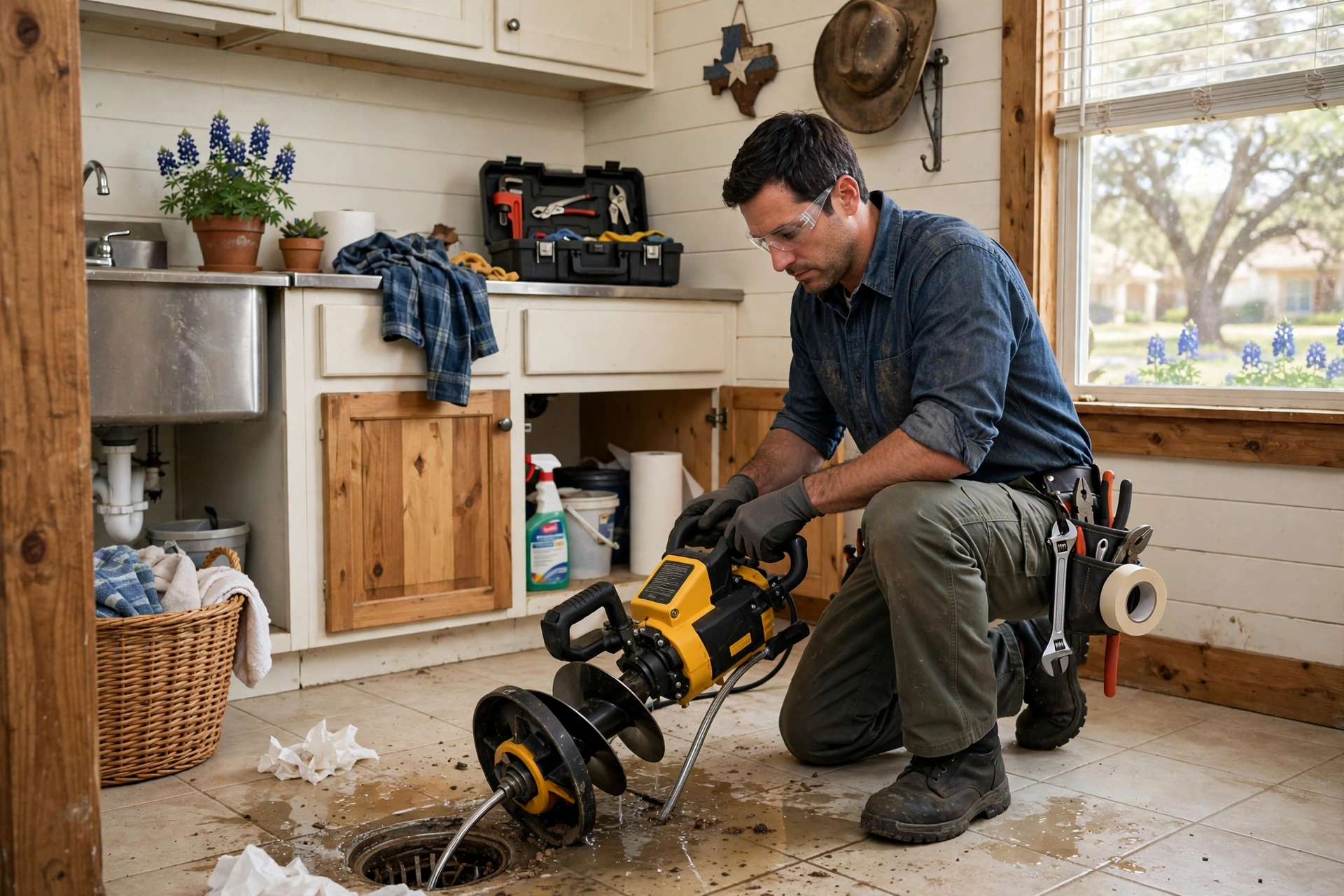
Slow sinks, gurgling tubs, and backed-up washing machine drains are the bread and butter of plumbing service. A basic cable clearing of a single fixture drain or branch line typically runs $150 to $300 nationally. That covers the technician running a drain machine through an accessible cleanout and confirming the line flows again.
Main sewer line blockages cost more because the cable run is longer and the equipment is bigger. Clearing a main line through an outside cleanout usually lands between $300 and $600. If the blockage keeps coming back, the next step is a camera inspection, which typically costs $200 to $400 and shows exactly what is happening underground: roots, a bellied section, scale, or a collapsed pipe. Paying for the camera is almost always worth it before authorizing a bigger job, because it turns a guess into a diagnosis.
In Friendswood specifically, two local factors show up in drain pricing again and again. The first is tree roots, which thrive in the moist soil near Clear Creek and find their way into older clay or cast iron joints; root intrusion often means the line needs more than a clearing, it needs a section repaired so the roots cannot return. The second is cleanout access. Many homes have a cleanout cap just outside the foundation, but when it is buried under landscaping or a patio addition, the technician spends the first part of the visit locating access, and that time shows up in the bill. If you know where your cleanout is, say so when you call; it genuinely shortens the visit.
Real talk: store-bought chemical drain cleaners rarely fix a real blockage, and they can damage older pipes and create a chemical hazard for the technician who eventually opens the line. A plunger or a hand auger is fine for a single slow sink, but repeated clogs mean the line needs professional attention.
Water heaters: repair or replace
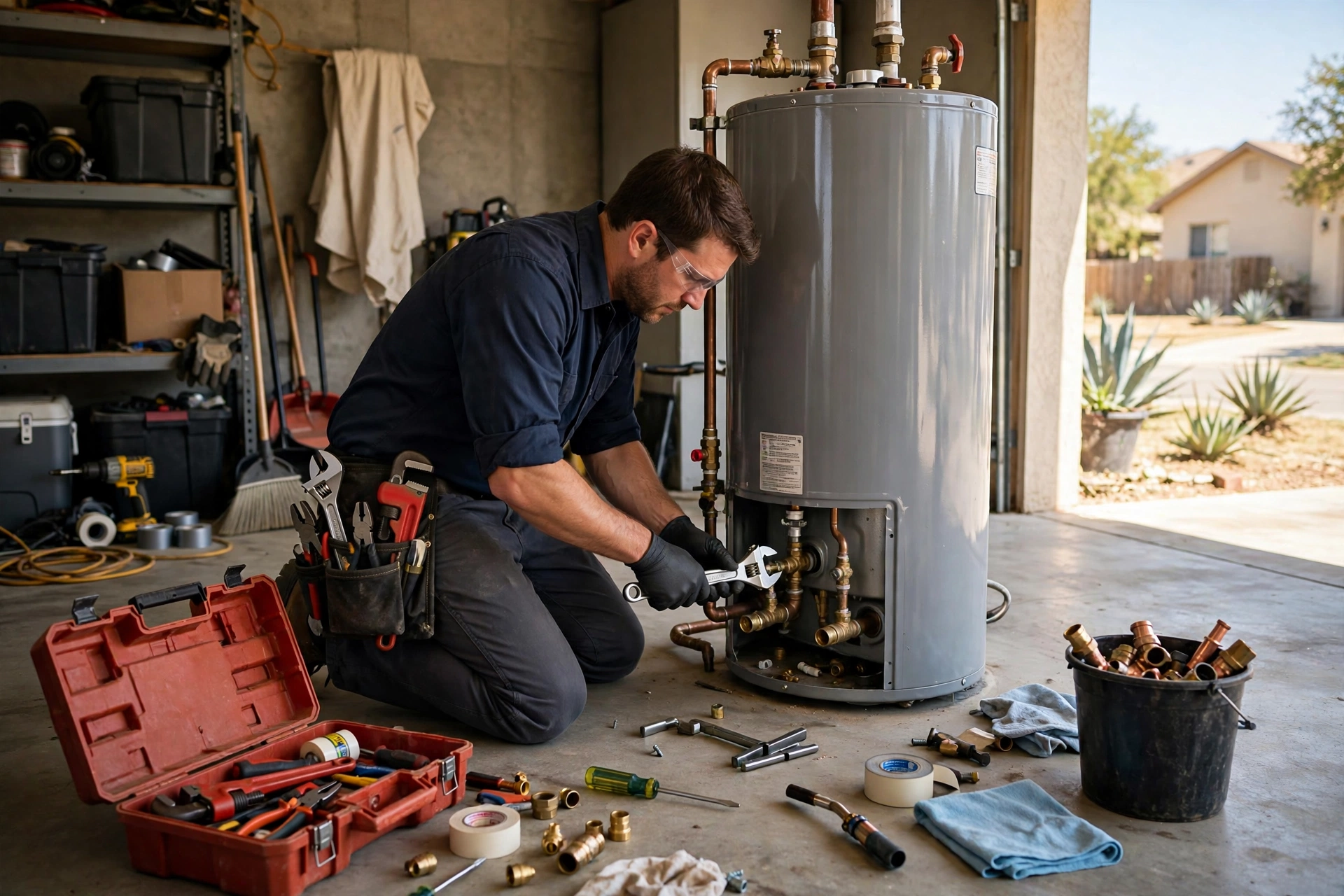
No hot water concentrates the mind, and water heaters are one of the few plumbing appliances with a predictable lifespan. A conventional tank unit lasts about 8 to 12 years according to U.S. Department of Energy guidance, and the hard water common in the Friendswood area tends to push that toward the shorter end because sediment builds up on the burner and elements.
Minor repairs are usually economical. A thermocouple or igniter replacement on a gas unit typically runs $150 to $300, a heating element or thermostat on an electric unit $200 to $400, and a gas control valve $300 to $600, parts and labor included. Annual flushing helps prevent the sediment problems that cause many of these failures; the DOE notes that draining a quart of water from the tank every few months reduces sediment buildup (U.S. Department of Energy, n.d.).
When the tank itself starts leaking, replacement is the only fix, and no sealant or patch is a real solution. A standard 40- or 50-gallon tank installation typically costs $1,200 to $2,800 nationally, depending on capacity, fuel type, venting, and any code upgrades like an expansion tank or new shutoff valves. Tankless installations run higher, usually $3,000 to $6,000, because they need larger gas lines or upgraded electrical service. If your tank is over ten years old and showing rust at the base, budgeting for replacement beats paying for a repair and then replacing it six months later. Learn more on our water heater repair page.
One cost that surprises homeowners is the code-upgrade portion of a water heater replacement. Current code typically requires an expansion tank on the cold water inlet, a properly sized drain pan with a drain line where the unit sits above finished space, and correct venting clearances on gas units. If your old installation predates these requirements, bringing the setup up to code can add a few hundred dollars to the job. It is not upselling; the inspector will fail the installation without them, and each item genuinely protects your home.
Leak detection: finding water you cannot see
Hidden leaks are the most stressful plumbing problem because you know something is wrong but cannot point at it. The water bill climbs, a patch of floor feels warm, or you hear running water with every fixture off. Professional leak detection typically costs $200 to $500, which covers acoustic listening equipment, thermal imaging, and pressure testing to pinpoint the leak before anyone cuts into a wall or floor.
You can do a simple version of the first test yourself. Turn off every fixture, note the number on your water meter, wait two hours without using any water, and check the meter again. Movement means water is going somewhere it should not. The toilet dye test is another free check: a few drops of food coloring in the tank, and colored water in the bowl thirty minutes later means the flapper is leaking. These tests do not replace professional equipment, but they tell you whether calling a plumber is urgent.
Slab leaks: the Friendswood special
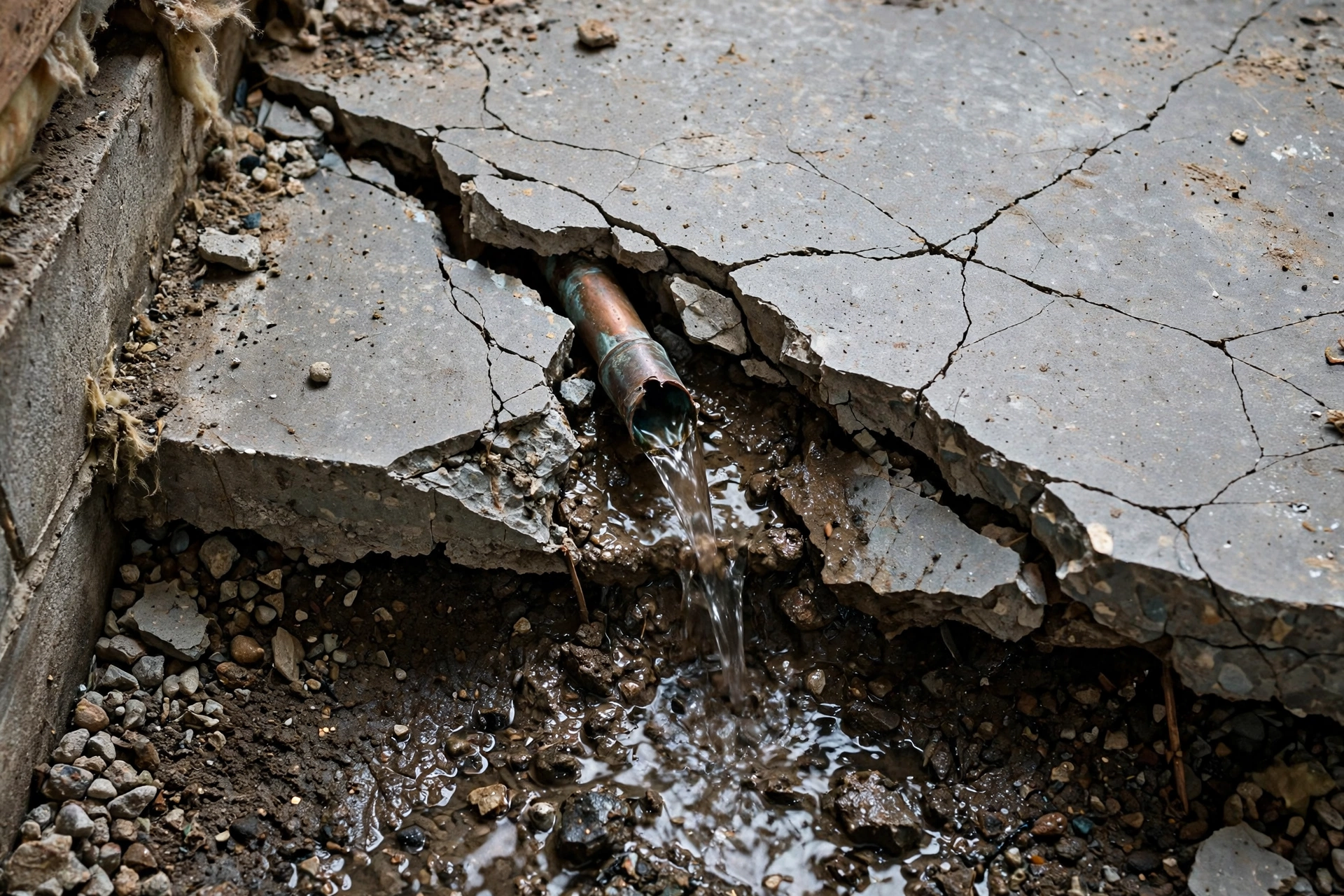
If there is one plumbing cost shaped by local geography, it is the slab leak. Most Friendswood homes are built slab-on-grade, meaning the water lines run through or under the concrete foundation, and the expansive clay soil here swells when wet and shrinks in drought. That movement stresses copper lines, and the result is a pinhole leak under the slab that announces itself through warm spots on the floor, damp carpet along a wall, or a meter that never stops.
Repairing a slab leak has two phases, and both cost money. Detection, using the acoustic and thermal methods described above, typically runs $200 to $500. The repair itself depends on the access method. Breaking through the slab directly at the leak, the traditional approach, usually costs $1,500 to $4,000 for a single leak, plus the cost of repairing the flooring afterward, which is often a separate contractor. Tunneling under the slab from outside costs more in labor but leaves the interior floors untouched, commonly $3,000 to $6,000. The third option, rerouting the leaking line overhead through walls or the attic, typically runs $2,500 to $6,000 and has the advantage of putting the new pipe where future leaks are easy to reach. See our slab leak repair page for how the diagnosis works.
One more honest point: some slab leaks are covered by homeowners insurance under sudden water damage provisions, though policies vary widely and slow leaks are often excluded. It is worth a call to your agent before you authorize the work, because documentation from the detection visit helps a claim.
Sewer line repair and replacement
The sewer lateral, the pipe from your house to the city main, lives a hard life. In older Friendswood neighborhoods it may be cast iron or clay tile, materials that crack, separate at joints, and invite tree roots. A camera inspection, $200 to $400 as noted above, is the starting point for any serious sewer conversation.
A localized spot repair, digging down to one bad section, typically runs $2,000 to $6,000 depending on depth and what sits above it. Trenchless methods, which pull a new liner through the old pipe or burst the old pipe while pulling in a new one, usually cost $80 to $250 per foot, and they earn their keep under driveways, patios, and mature landscaping where open trenching would destroy thousands of dollars of concrete and plants. A full traditional replacement of a residential lateral commonly lands between $4,000 and $12,000. Roots are the most common culprit in this area, and once roots have found a joint, they come back, which is why a repair that seals the pipe usually beats repeated rooter visits.
Gas lines: priced for safety
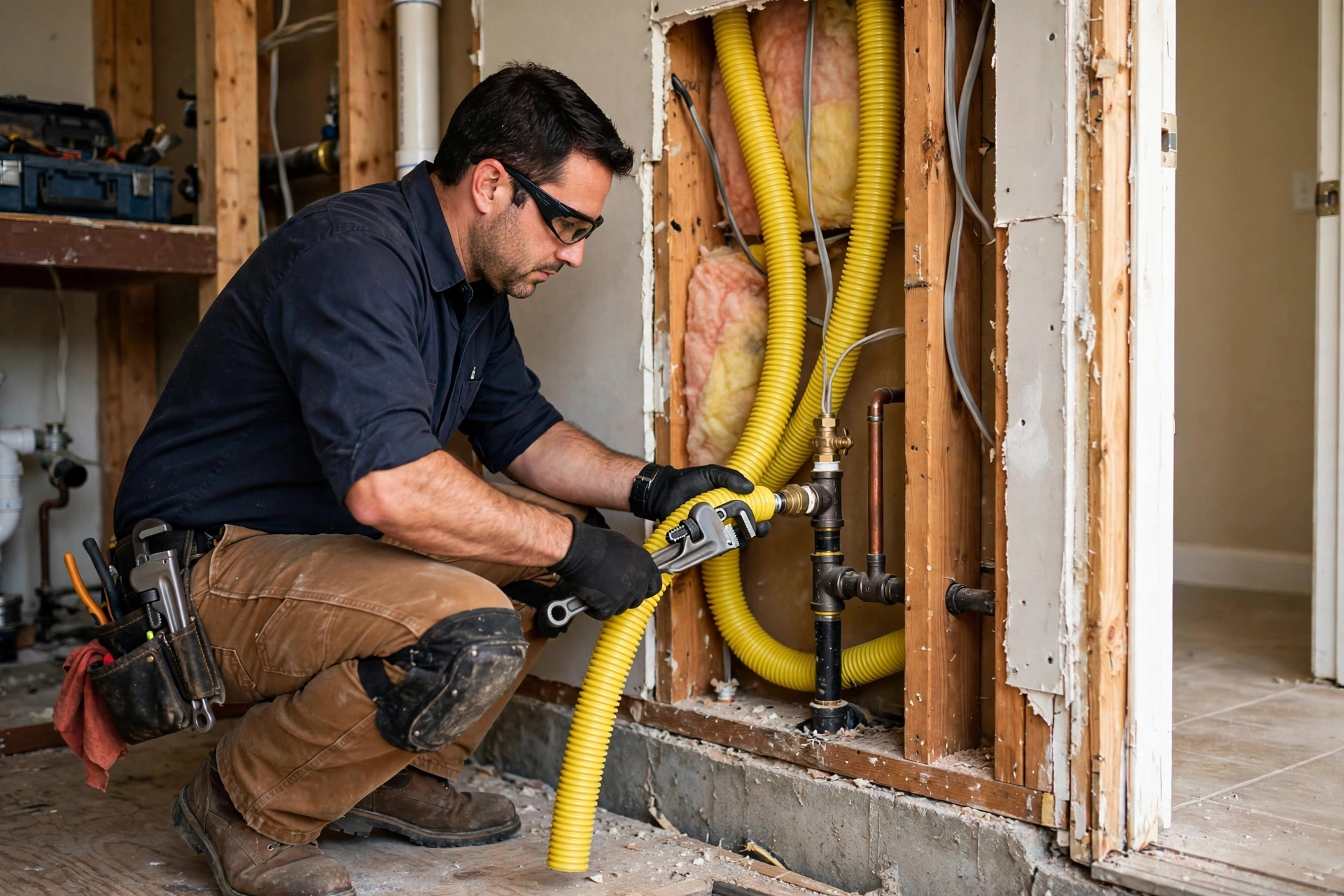
Gas work sits in its own category because the stakes are different. Adding a new gas line for a range, dryer, grill stub, or outdoor kitchen typically runs $500 to $2,000 depending on length, pipe material, and how many walls or how much attic the run crosses. Repairing an existing line or adding a shutoff valve is usually a few hundred dollars.
What you are really paying for with gas work is the testing. After any gas piping work, the system must be pressure-tested and the connections checked for leaks before the gas is turned back on, and in Friendswood this work requires a permit and inspection. That testing and permitting is not padding; it is the part that keeps your family safe. This is also the one plumbing job where a handyman or DIY attempt is never appropriate. Gas piping in Texas must be installed by a licensed professional, and the Texas State Board of Plumbing Examiners maintains an online license lookup so you can verify credentials before anyone touches your gas system (Texas State Board of Plumbing Examiners, n.d.).
Pipe repair and whole-home repiping
Individual pipe repairs are straightforward: fixing a pinhole, replacing a split section, or repairing a failed joint in an accessible location typically costs $200 to $800 depending on the material and how much wall or ceiling must be opened and closed. Copper costs more in materials than PEX, and work inside finished walls costs more than work in an open garage or attic.
Whole-home repiping enters the conversation when the patches keep coming. Homes from the seventies and eighties with galvanized steel supply lines are the classic candidates: the pipes corrode from the inside, flow shrinks, water runs rusty on first use, and pinhole leaks appear in sequence. A full repipe of a typical single-story home commonly runs $4,000 to $15,000 nationally, depending on size, number of fixtures, material choice, and how much drywall repair is included. PEX is usually the most economical option and resists the scale buildup that plagues this area's water; copper costs more but has its loyalists. When three or more separate leaks have been repaired in a year or two, the math usually favors repiping over the next patch.
Fixtures: toilets, faucets, and disposals
Fixture work is the most predictable corner of plumbing pricing. A running toilet is usually a $150 to $300 repair, most often a worn flapper or fill valve, while a complete toilet replacement with a mid-range unit typically runs $400 to $900 installed. A dripping faucet is generally a $150 to $350 cartridge or washer replacement, though high-end or wall-mounted fixtures cost more in parts.
Garbage disposals split the difference between repair and replacement. Clearing a jam or replacing a worn unit typically costs $200 to $500 installed, and since a new mid-range disposal itself costs around $100 to $250, replacement often makes more sense than a repair once the unit is past five or six years old. These are the jobs where flat-rate pricing shines: the technician can quote the total before starting, and you know exactly what you are paying.
Emergency plumbing: what the premium covers
After-hours, weekend, and holiday calls carry a premium, and it is worth understanding why. An emergency call pulls a technician off the schedule or out of bed, and the company pays overtime or on-call rates to make that possible. Expect the total to run noticeably higher than the same job during business hours, though reputable companies will tell you the after-hours rate on the phone before dispatching.
What counts as an emergency is simpler than it sounds: water actively damaging your home, sewage backing up into living space, no water at all, or the smell of gas. A dripping faucet or a slow drain can wait for morning and save you the premium. The single most valuable thing you can do in any water emergency costs nothing: know where your main shutoff valve is before you need it. In Friendswood slab homes it is often on the front exterior wall or in the garage. Turning that valve buys you time and limits damage while help is on the way.
What moves prices up or down in Friendswood
Several local factors explain why the same job costs different amounts at different addresses. Slab-on-grade construction is the biggest: any work under the floor means concrete work, which adds labor and restoration cost compared to a pier-and-beam home where pipes hang accessible underneath. Expansive clay soil adds the second factor; seasonal movement means more slab and sewer line failures here than in regions with stable soil, and repairs must account for future movement.
Hurricane season is the third factor. From June through November, heavy rain overloads drains and sewer lines, and demand for emergency service spikes, which is simply supply and demand at work. If your job is not urgent, scheduling outside storm season can mean faster appointments. Hard water is the fourth: mineral-heavy Gulf Coast water shortens water heater life and scales up fixtures, which is why flushing the water heater yearly and considering filtration pay for themselves over time. Finally, permits and inspections for gas, water heater, and repipe work add a few hundred dollars but protect you with the city and your insurer.
Getting a fair quote: the five-minute version
You do not need to become a plumber to get a fair price; you need a short checklist. First, get the scope in writing: what will be done, what materials will be used, and what is not included, such as drywall or flooring repair after a slab break. Second, ask whether the diagnostic fee applies toward the repair. Third, confirm licensing through the Texas State Board of Plumbing Examiners' online lookup, which takes about a minute. Fourth, compare like with like: one quote for a spot repair and another for a reroute are different jobs, not competing prices for the same job.
Fifth, be wary of the purely verbal quote. A price spoken at the kitchen table and a price written on an invoice with the scope attached are different things, and misunderstandings almost always favor whoever wrote nothing down. A written estimate should state what happens if the job uncovers something unexpected, such as a second leak behind the first one, and how that discovery will be priced before work continues. Companies that put this in writing are not being difficult; they are protecting both sides of the transaction.
Real talk: the cheapest bid is not always the bargain it looks like, especially when it skips permits, uses thinner materials, or leaves restoration to you. A mid-range quote with a written scope, named materials, and clear written terms is usually the better value, and a company willing to explain the options in plain language is worth more than a small discount.
Price guides like this one exist to make you an informed customer, not to replace a diagnosis. Every home has its own combination of pipe material, access, and soil movement, and the honest answer to "what will this cost" always starts with someone looking at the actual problem. When you call, describe what you see, hear, and smell in detail; the more precise your description, the more accurate the estimate on the other end of the phone.
Plumbing Cost Questions, Answered
What is the average cost of a plumber visit in Friendswood, TX?
Most simple repairs fall between $150 and $500 including the diagnostic fee, while larger jobs such as water heater replacement or slab leak repair run from $1,200 into several thousand dollars. The exact number depends on access, materials, and how much of the system must be opened up.
Why is slab leak repair so expensive in Friendswood?
Most Friendswood homes sit on slab foundations over expansive clay soil, so reaching a leaking line means cutting concrete, tunneling, or rerouting pipe overhead. Detection alone typically runs $200 to $500, and the repair commonly lands between $1,500 and $6,000 depending on the method.
How much does it cost to replace a water heater in Friendswood, TX?
Nationally, a standard tank water heater installation typically runs $1,200 to $2,800 depending on size, fuel type, and code upgrades, while tankless installations usually run $3,000 to $6,000. Hard water in the Friendswood area shortens tank life, so flushing the tank yearly protects that investment.
Do plumbers charge more for emergency calls?
Yes, after-hours, weekend, and holiday calls usually carry a premium over standard daytime rates because the crew is pulled off schedule or out of bed. For active flooding or a gas smell, that premium is worth paying, since water damage costs far more than the surcharge.
Is hydro jetting worth the cost for a clogged main line?
For lines with grease, scale, or roots that keep returning after cable cleaning, hydro jetting is often the better long-term value even though it typically costs $400 to $900 versus $150 to $300 for a basic cable clearing. A camera inspection first confirms whether the pipe can handle the pressure.
How can I tell if a plumbing quote is fair?
A fair quote puts the full scope in writing, names the materials, and separates diagnostic charges from repair labor. You can also confirm the plumber's license through the Texas State Board of Plumbing Examiners' online lookup before agreeing to any work.
References
HomeAdvisor. (n.d.). How much does it cost to hire a plumber? https://www.homeadvisor.com/cost/plumbing/
HomeAdvisor. (n.d.). How much does water heater installation cost? https://www.homeadvisor.com/cost/water-heaters/
This Old House. (n.d.). Plumbing. https://www.thisoldhouse.com/plumbing
Texas State Board of Plumbing Examiners. (n.d.). License search. https://tsbpe.texas.gov/
U.S. Census Bureau. (2023). American Housing Survey. https://www.census.gov/programs-surveys/ahs.html
U.S. Department of Energy. (n.d.). Energy Saver: Water heating. https://www.energy.gov/energysaver/water-heating
U.S. Environmental Protection Agency. (n.d.). WaterSense. https://www.epa.gov/watersense
Need a Plumber in Friendswood, TX?
Call, describe the trouble and hear what the next step looks like.
Call (281) 767-9387