Plumbing Emergency Troubleshooting: Burst Pipes, Leaks & Floods
Home / Blog / Emergency Troubleshooting
Water moves faster than panic does. This guide walks you through the first minutes of a burst pipe, the signs of a slab leak in a Texas slab home, how to find your main shutoff, what to do before the plumber arrives, and how to prepare for hurricane season in Friendswood, League City, Pearland, and Clear Lake.
Start With the Shutoff, Not the Phone
Every plumbing emergency in a Friendswood home has the same first step: stop the water. In most slab-on-grade houses here, the main shutoff sits on the garage wall or near the water heater, right where the supply line enters the building. Look for a lever handle or a round wheel on a pipe coming out of the wall. Many homes also have a second valve in the meter box at the curb, under a rectangular lid near the street. If you rent or you just moved into 77546 or 77549, finding both valves this weekend is one of the highest-value ten-minute jobs a homeowner can do.
Know which type you have. A lever handle means a ball valve, which closes with a single quarter turn so the lever sits across the pipe. A round handle means a gate valve, which needs several full turns clockwise to close and can seize up if it has not moved in years. Turn each valve closed and open once a year to keep it working. A valve you cannot move in a dry run is a valve that will not move in an emergency, and replacing it on a calm day is far cheaper than discovering the problem with water on the floor.
The curb-side valve in the meter box deserves a note of its own. It usually needs a meter key, a cheap T-handled tool sold at any hardware store, to lift the lid and turn the valve. Buy one and keep it in the garage. In many Friendswood neighborhoods the meter box sits near the sidewalk and fills with dirt and fire ants, so clear it out twice a year. If your indoor shutoff ever fails, that curb valve is your backup plan, and it also lets you verify the meter test described below without crawling behind the water heater.
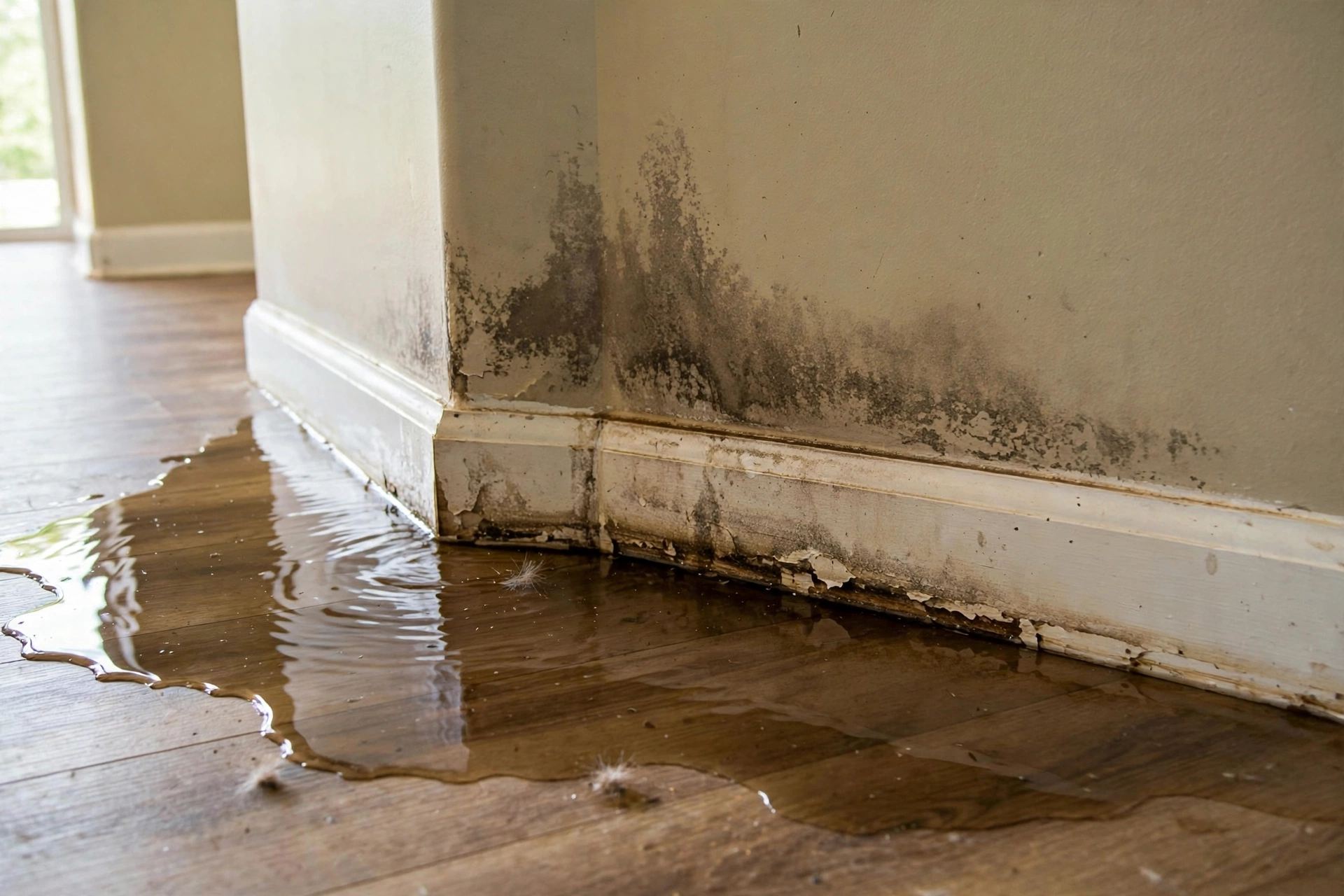
Burst Pipe Triage, in the Right Order
When a pipe lets go, the order of operations matters more than speed alone. Follow this sequence and you will do more good in five minutes than most people do in an hour of scrambling.
- Shut off the main. Quarter turn for a ball valve, several turns for a gate valve. If you cannot find the main, close the fixture valve under the nearest sink or behind the toilet.
- Drain the pressure. Open the lowest faucet in the house, then a few upstairs taps. This relieves pressure in the lines and routes remaining water to the tub or a bucket instead of the burst.
- Respect electricity. If water is near outlets, the breaker panel, or a light fixture, do not wade in. Flip the breaker only if you can reach it on a dry path. Standing water and electricity is a combination for the utility or fire department, not improvisation.
- Protect and document. Move rugs, electronics, and furniture legs out of the wet zone. Take photos and a short video of the source and the damage before anything dries, because your insurer will ask for a timeline.
- Call. Describe the source, what you shut off, and how much water escaped. That information lets the dispatcher send the right equipment on the first trip.
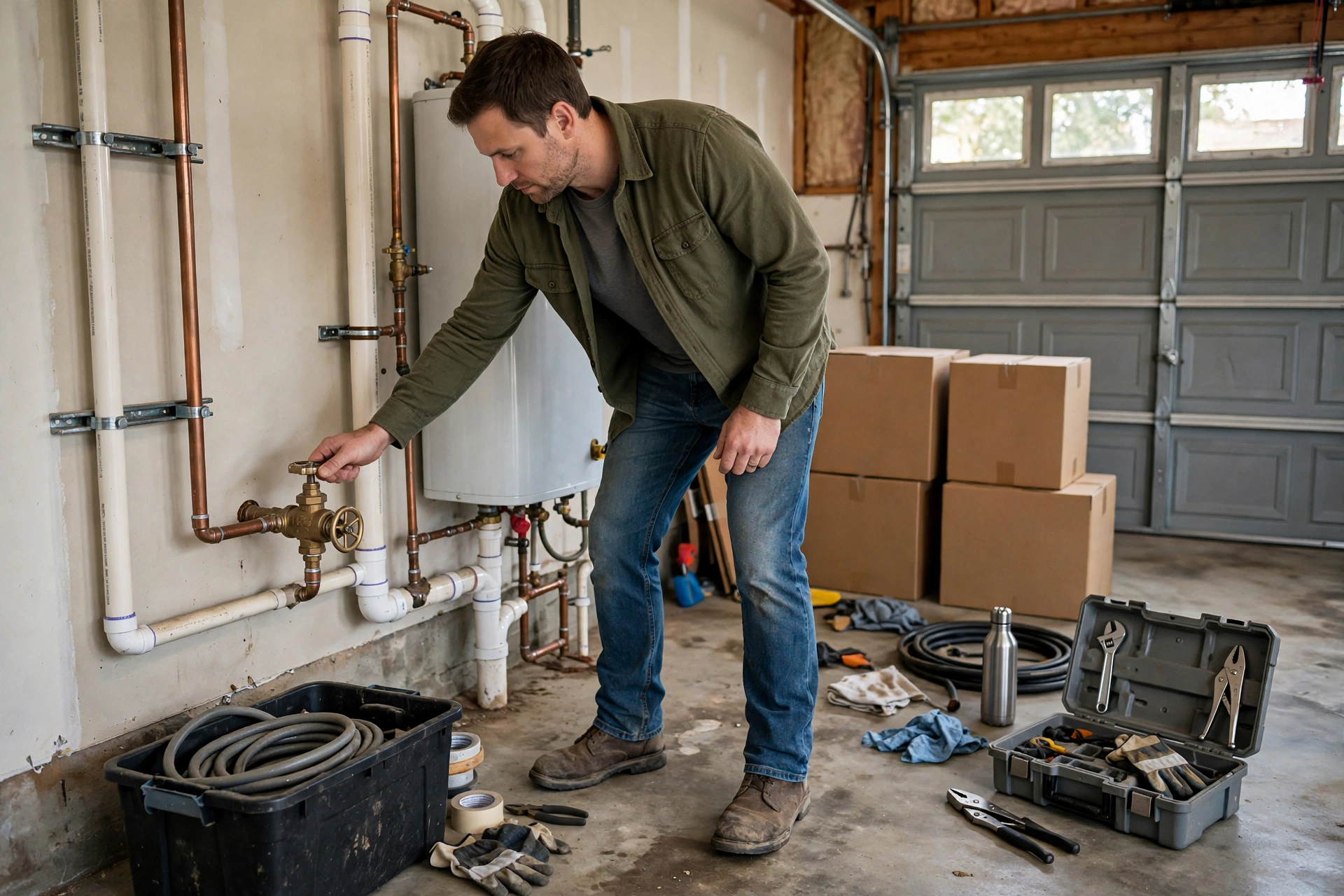
Real talk: If you hear water running and every tap is off, do not wait for a second symptom. The ten-minute meter test below tells the truth faster than any guess.
Slab Leak Signs in a Texas Slab Home
Friendswood sits on expansive clay that swells when it soaks up Gulf Coast rain and shrinks in drought. That movement stresses the copper or PEX lines running under your slab, and a pinhole or cracked fitting down there can run for weeks before it shows. Learn the signs and you can catch one early, while it is a repair instead of a remodel.
Watch for warm spots on tile or wood floors, which often mean a hot-water line is leaking under the concrete. Listen for the sound of running water when everything is off. Check the water meter: turn off every fixture and appliance, then watch the dial or the low-flow triangle for ten to fifteen minutes. If it moves, water is going somewhere it should not. Damp flooring along a wall, a musty smell that air freshener cannot fix, and a water bill that jumps with no change in habits all point the same direction. For homes near Clear Creek in the lower parts of Friendswood, where the water table runs high, dampness deserves extra attention.
Do not confuse a slab leak with condensation. In our humid summers, cold water lines in a hot garage sweat heavily, and that puddle under the water heater is often just physics. The difference is persistence: condensation dries when the weather changes, while a leak keeps feeding the same spot day after day.
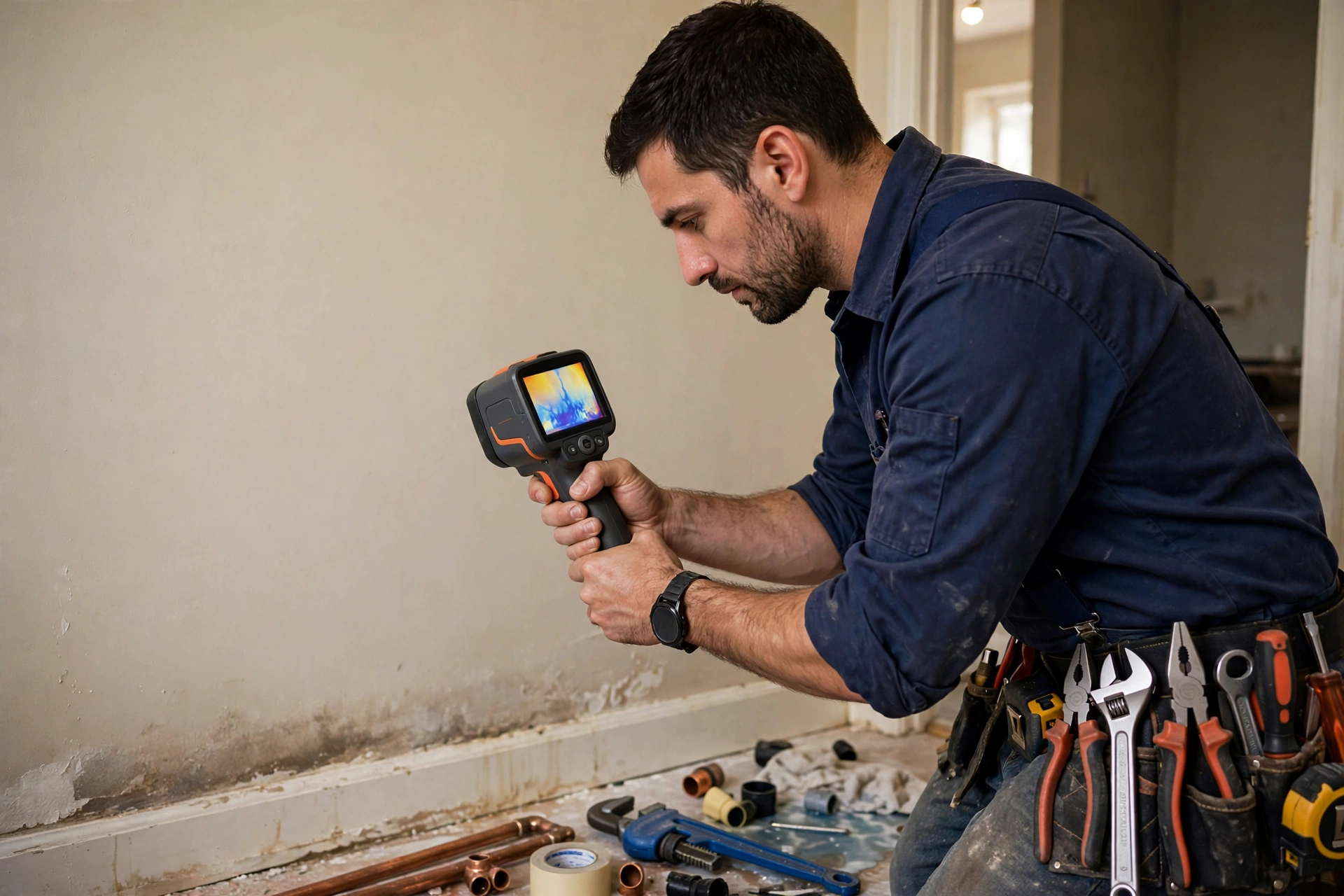
Finding Hidden Leaks Without Tearing Up Walls
You do not need to open drywall to find most leaks. Start with the meter test described above, because it answers the biggest question first: is water escaping the system at all? Next, try the toilet dye test. A few drops of food coloring in the tank, then fifteen minutes without flushing. Color in the bowl means the flapper is leaking, which can waste hundreds of gallons a day silently.
A simple pressure gauge screwed onto a hose bib tells you more in two minutes than an hour of guessing. Normal residential pressure in our area usually sits between 40 and 80 psi. A reading that drops when no fixture is running suggests a supply-side leak, while pressure above 80 psi can itself cause pinholes and failed supply lines over time. If the basics do not settle it, a plumber's acoustic listening equipment or thermal camera can trace a leak through concrete and framing, which is exactly what leak detection service is for. Listening gear hears what eyes cannot see, and it keeps exploratory holes to a minimum.
What to Do Before the Plumber Arrives
The crew will ask questions, and your answers shape what they load on the truck. While you wait, work through this list.
- Photograph everything. The source of the leak, the spread of the water, the meter reading, the shutoff position. Photos beat memory every time.
- Clear a path. Move boxes and furniture away from the water heater, the affected bathroom, or the wet wall so the technician can work instead of rearranging your garage.
- Note the timeline. When did you first notice it? Did anything change just before, like a freeze, a storm, or a remodeling project?
- Stop feeding the problem. Do not run the dishwasher or laundry if a drain is backing up. Do not pour chemical drain cleaner into standing water, because it damages pipes and makes the water hazardous for whoever works on it.
- Stay out of sewage. Wastewater carries bacteria. Keep people and pets away from a backup and stop using all water until it is assessed.
If you smell gas at any point, the rules change completely: do not flip switches or light anything, leave the house, and call the gas utility or 911 from outside. A plumber inspects and repairs gas piping only after the utility declares the area safe.
Hurricane Season Prep for Your Plumbing
Hurricane season runs June through November, and in Friendswood the plumbing risks are rainfall and power loss, not just wind. Heavy rain can overload drain and sewer lines, and an outage stops a sump pump exactly when it is needed most. Anyone who lived through Harvey in 2017 knows that water does not need a storm surge to reach a slab; it just needs hours of rain and nowhere to go.
Before June, test the sump pump by pouring a bucket of water into the pit and watching it cycle. A pump that has never been tested is a decoration. Clear gutters and downspouts so roof water runs away from the foundation instead of pooling against it. Keep the sewer cleanout cap accessible, not buried under mulch, because a plumber may need it in a hurry. If your property sits low near Clear Creek, ask about a battery backup for the pump, since outages often arrive with the storm, and consider a backwater valve that keeps a surcharged city sewer from pushing into your home. After any big rain, watch for slow drains and gurgling toilets, which can signal a sewer line stressed by shifting saturated soil.
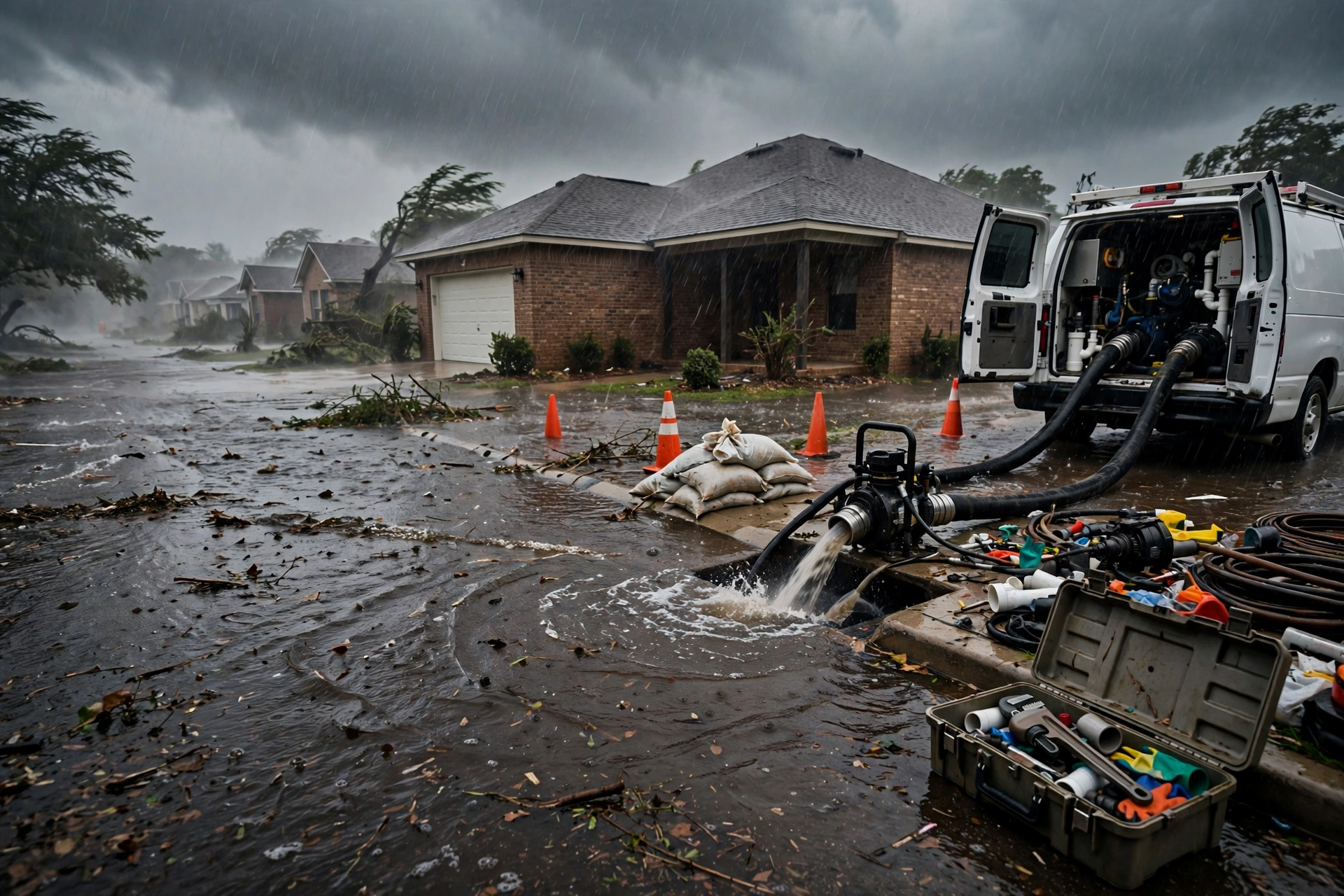
Real talk: A sump pump that has never been tested is a decoration. Pour a bucket of water in the pit in May and find out before June does.
Water Damage: The First 24 Hours
Once the source is stopped, the clock shifts to drying. The EPA advises drying water-damaged areas within 24 to 48 hours to prevent mold growth, and in Gulf Coast humidity that window is not generous. Start by removing standing water with a wet vacuum or mop, then get air moving with fans and, if you have one, a dehumidifier. Pull up wet rugs and move furniture off damp carpet so legs do not wick moisture. Porous materials that stayed wet, like soaked drywall and carpet pad, usually need to go rather than dry in place.
Document as you work. Insurers distinguish between sudden accidental damage, which policies usually cover, and long-term leaks or neglect, which they typically do not. Your photos, the plumber's written findings, and a simple timeline of what happened when make the claim process far smoother. Keep receipts for anything you buy for emergency mitigation, like fans or tarps.
What Emergencies Typically Cost (National Ranges)
Nobody can price your job over the phone without seeing it, but national ranges help you calibrate. According to national cost guides, a straightforward burst pipe repair often lands in the low hundreds, while slab leak repair can range from several hundred dollars for an accessible spot repair to several thousand when concrete must be opened or lines rerouted overhead. Professional leak detection commonly runs a few hundred dollars, and full water damage restoration typically starts around one thousand dollars and climbs with square footage. A new sump pump installation generally falls in the low four figures. These are national figures, not quotes: access, materials, and how long water ran all move the number. What raises cost fastest is delay, because every extra day of wet drywall and flooring multiplies the restoration bill. Calling early is the cheapest decision in this entire article.
If the trouble turns out to be smaller than feared, that is good news, not a wasted call. A plumber who finds a sweating line instead of a slab leak has still given you something valuable: certainty, plus a tested shutoff and a plan for next time.
Sewer Backups During Heavy Rain
One of the nastiest surprises a storm can deliver is a sewer backup, when wastewater comes up through a floor drain, shower, or toilet instead of leaving. It happens when the municipal sewer or your own main line is overwhelmed or blocked, and the lowest drain in the house becomes the relief valve. Clay soil makes this worse: saturated ground shifts pipe sections out of alignment, opening joints where roots enter, and a line that drained fine in March can choke in September.
The first response is to stop using all water immediately. Every flush and every laundry cycle feeds the backup. Keep people and pets out of the affected area, since wastewater carries bacteria and viruses. Do not try to snake it yourself with a hand auger from the hardware store; a main-line blockage needs a professional cable or hydro jetting, and a camera inspection afterward shows whether roots, a belly, or a collapsed section caused it. If backups repeat, ask about a backwater valve, which lets flow leave your home but slams shut when the city line tries to push back in. It is one of the most cost-effective flood protections a low-lying Friendswood home can have.
Know where your sewer cleanout is before you need it. It is usually a capped pipe near the foundation or in the front yard, and it gives the plumber direct access to the main line without pulling a toilet. If yours is buried under mulch or landscaping, uncover it and mark it. In an emergency, the ten minutes spent digging for a cleanout are ten minutes of wastewater you cannot get back.
After the Emergency: Preventing the Next One
Once the crisis is over, spend an hour turning the experience into prevention. Start with the shutoff valves: replace any gate valve that was stiff or would not fully close with a modern ball valve. They cost little, they last decades, and the next emergency will thank you. Add a pressure regulator check to the list if your hose-bib reading was above 80 psi, because high pressure quietly shortens the life of every fixture and supply line in the house.
For slab homes, the long game is watching the soil. Expansive clay moves with moisture, so consistent watering around the foundation during drought keeps the ground from shrinking away from the slab and stressing buried lines. It sounds like landscaping advice, but foundation plumbers will tell you it is plumbing advice too. Inside, replace rubber washing-machine hoses with braided stainless steel lines, which burst far less often, and consider an automatic shutoff valve with water sensors near the water heater and washing machine. These devices close the main when they detect a leak, which matters most when nobody is home.
Finally, keep a simple home plumbing file. Note the main shutoff location, the water heater's age, the last time the sewer was camera-inspected, and the plumber's number. Tape a small label on the shutoff valve itself so a housesitter or a teenager home alone can find it. Emergencies are stressful enough without a scavenger hunt, and the cheapest emergency is the one you were ready for.
Frequently Asked Questions
Where is the main water shutoff valve in a Texas slab home?
Look first on the garage wall or near the water heater, where the line enters the house. Many Friendswood homes also have a second valve in the meter box at the curb. If you see a lever handle, it is a ball valve and closes with a quarter turn; a round handle means a gate valve that needs several turns clockwise.
How do I know if a leak is under my slab?
The classic signs are a warm spot on the floor, the sound of running water when every fixture is off, a water meter that keeps moving, damp flooring along a wall, and a bill that jumps without explanation. The meter test, turning everything off and watching the dial for ten minutes, is the fastest way to confirm.
Is a burst pipe covered by homeowners insurance?
Policies usually cover sudden and accidental water damage from a burst pipe, but they typically do not cover the pipe repair itself or damage from long-term leaks and neglect. Document everything with photos and call your insurer early; adjusters want a timeline.
What should I do first if sewage backs up into the house?
Stop using all water, including toilets and laundry, so you stop feeding the backup. Keep people and pets out of the affected area, since wastewater carries bacteria. Then call a plumber; backups often need a camera inspection to find the blockage.
How do I prepare my plumbing for hurricane season?
Test the sump pump with a bucket of water before June, clear gutters and downspouts, keep the sewer cleanout accessible, know where the main shutoff is, and consider a battery backup for the pump. After a storm, watch for slow drains that signal a stressed sewer line.
Can I use chemical drain cleaner while waiting for the plumber?
It is better not to. Caustic cleaners can damage pipes and make the standing water hazardous for whoever works on it next. A plunger or a drain snake is safer, and for a full backup nothing beats a professional cable or hydro jetting.
References
- U.S. Environmental Protection Agency. (2024). A brief guide to mold, moisture and your home. https://www.epa.gov/mold/brief-guide-mold-moisture-and-your-home
- Federal Emergency Management Agency. (n.d.). Floods. Ready.gov. https://www.ready.gov/floods
- American Red Cross. (n.d.). Flood safety. https://www.redcross.org/get-help/how-to-prepare-for-emergencies/types-of-emergencies/flooding.html
- HomeAdvisor. (2025). How much does water damage restoration cost? https://www.homeadvisor.com/cost/disaster-recovery/water-damage/
- This Old House. (n.d.). How to shut off water to your house. https://www.thisoldhouse.com/plumbing/21016544/how-to-shut-off-water-to-your-house
- Texas State Board of Plumbing Examiners. (n.d.). Consumer information. https://tsbpe.texas.gov/
When water is winning, skip the research and call. Friendswood Plumbing Pros at (281) 767-9387 handles emergency plumbing, slab leak repair, and leak detection across Friendswood, League City, Pearland, and Clear Lake, and water filtration for the hard-water scale our Gulf Coast supply leaves behind.
Water Where It Should Not Be?
Call, describe what you see, and hear what the next step looks like.
Call (281) 767-9387